
Rebuilding after centuries
For centuries, Europeans extracted all that they could from peoples around the planet, displacing whole civilisations with guile, violence and genocide.
For more than 300 years, the British Empire grew fat and powerful from the incursions and the settlements it established in countries around the planet. From 1583, when the first English settlement was established, in what they then described as the New Found Land, and what was later to be called Canada, the English, in competition with other European countries roamed the planet in a continuing search for newly populated territory. In that age of “discovery”, they arrived in the Caribbean Sea and immediately moved to unseat the Spanish, who had been occupying territories there for 100 years and more. These were the first steps in the rise of the
British Empire.
The Caribbean climate was perfect for producing agricultural products which could not survive, let alone flourish, in Europe. And so, the British, the French, and the Dutch soon joined the Spaniards in claiming ownership of lands washed by the Caribbean Sea. Ownership of these territories was only the first step in a process by which wealth from production could be realised.
Agricultural production and shipment of produce such as tobacco, indigo, and ginger to Europe expanded in the early 17th Century driving the Industrial Revolution that brought great wealth to Europe. The wealth generated from Caribbean sugar production, driven by enslaved labour, and later by banana exports, was particularly significant in lifting Europe out of extreme poverty endured for centuries before the rise of the British Empire.
It was these tools designed and manufactured in that Industrial Revolution that made it possible.
The fall of the British Empire in the first half of the 20th Century ultimately forced Great Britain to divest itself of the costs and commitments of a global empire. This it did by granting its former colonies “self-government” and leaving behind ageing tools and facilities. The subjects of British colonialism in Africa, the Caribbean, and elsewhere were never to fully share in the wealth their labour and investments had produced for centuries. Instead, theirs was the task of making old machines work in an increasingly sophisticated world. Indeed, the newly independent states were left in various stages of poverty to repair and use ageing tools and facilities, including centuries-old railroads and seaports.
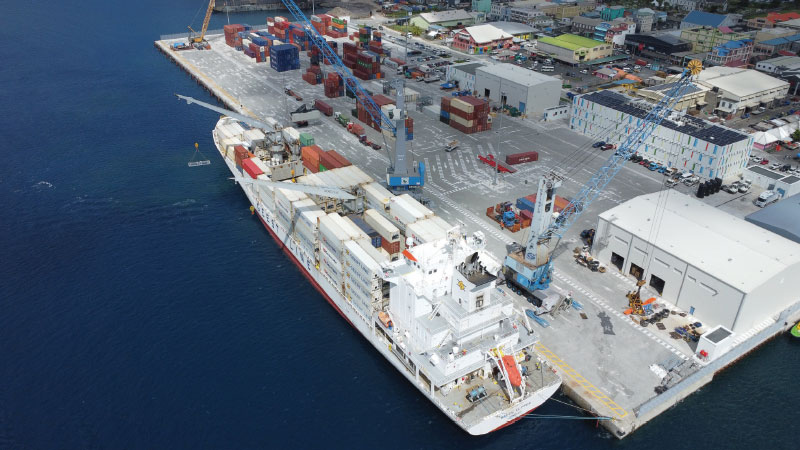
As the 20th Century came to an end, the technologies and systems that drove global commerce had become sophisticated and expensive to acquire and maintain. Small island states in the Caribbean had no choice but to finance, build and equip new seaports with the systems and technology of the day.
It is against this backdrop that, in the first quarter of this 21st Century (1Q - C21), many Caribbean countries have had to finance, design and build new ports; upgrade and expand cargo storage facilities; and, acquire and commission
state-of-the-art cargo movement machines.
Mike Jarrett
Founder/Editor-in-Chief